Showing posts with label Bronx. Show all posts

Wednesday, July 1, 2026

How Data Sparks Conversations About Health and Equity in the Bronx


The following post features Bronx Health REACH Project Director Charmaine Ruddock and was written by County Health Rankings & Roadmaps (CHR&R), a program of the University of Wisconsin Population Health Institute and can be found at their website. 


For over two decades, Bronx Health REACH (BHR) has been a force for health equity in New York City’s most under-resourced borough. Led by the Institute for Family Health, this coalition of more than 80 organizations has worked to eliminate racial and ethnic health disparities in the Bronx. One of their most powerful tools? County Health Rankings & Roadmaps (CHR&R) data-informed Health Groups (formerly known as Rankings).


Health Groups illustrate the relative similarities in county health among Health Groups on a national scale. Health Groups support data-informed comparisons in county community conditions, as well as population health and well-being on a national scale. When CHR&R previously used ordinal rankings to order each county in a state from most to least healthy, Bronx County consistently ranked 62nd out of 62 counties in New York State — a stark reminder of the deep-rooted inequities facing the community.


In 2015, Bronx Health REACH and several key stakeholders in the Bronx launched #Not62: The Campaign for a Healthy Bronx, using CHR&R data as a rallying cry. “We’ve used the Rankings as a critical way to talk about it,” said Charmaine Ruddock, BHR’s project director. “This should be unacceptable.’”


This simple but powerful message has helped Bronx Health REACH “needle” policymakers—their word for persistent, strategic advocacy. “Others call it advocacy; we call it needling,” Ruddock explained. “To be incessant and insistent. To prod those who need to be prodded.”


CHR&R data have also helped the coalition educate the public. Many Bronx residents didn’t know their county’s health relative to others in the state. “It gave us a clear, easy-to-understand way to talk about the health of our community,” Ruddock said. “It helped us say, ‘Here’s where we are. Here’s what needs to change.’”


In 2021, Bronx Health REACH hosted a community event with CHR&R staff to celebrate improvements in some health behaviors and community conditions. “We were able to show where we moved from 50-something to 20-something in certain measures,” Ruddock said. “That was because of our efforts and partners’ efforts. The Rankings helped us tell that story.”


As CHR&R has shifted from ordinal rankings to data-informed Health Groups, Bronx Health REACH continues to use the data to push for change. “With the Health Groups, we see the opportunity to connect with other communities across the country who are in similar health groups. That opens the door for a national conversation.” In June 2025 Bronx Health REACH — partnering with the steering committee of the Not62: A Campaign for a Healthy Bronx, the National REACH Coalition and CHR&R — convened a meeting with organizations from communities in eight states, who shared similar challenging health outcomes and the determining community conditions.  The goal of the meeting was to address these outcomes and to explore the possibility of joint efforts.  


CHR&R has also helped Bronx Health REACH build credibility with funders, health systems and elected officials. “CHR&R comes with such authority,” Ruddock said. “When we use CHR&R data, it validates what we’re saying. It gives weight to our demands.”

Friday, December 19, 2025

PS 32’s Open Streets: Building Relationships and Growing Capacity


 This blog post was written by Maurelhena Walles, Founder and CEO of Equity Design and Diana Bernal, Program Coordinator for the Creating Healthy Schools & Communities program at Bronx Health REACH.


Three years ago, the principal and staff of PS 32 located in the Bronx, expressed a far-reaching vision of becoming their community’s fitness hub. As part of the New York State Creating Healthy Schools and Communities (CHSC) program, PS 32 teamed up with Bronx Health REACH, Equity Design, and Street Lab to make this vision happen. The first step Equity Design, whose role was facilitator, took, with the permission of PS 32’s Principal Rebecca Lew, was to gather together the school teachers and staff to assess the challenges and aspirations for improving the physical and social well-being of the school. As a result, they decided to implement Open Streets, a program that temporarily closes down a street to cars during the day to provide open space for people to gather and play. 


To successfully implement Open Streets at PS 32 every school year, teachers and school staff held team building and mind-mapping sessions to get to know each other better. Through these relationship building exercises, their school wellness council was formed. As PS 32’s school wellness council grew, so did the ideas for Open Streets events, and how to utilize them for more than just physical activity for the students. PS 32 came up with their Outdoor Learning initiative, which aimed to provide a blend of academics and physical activity. Through this initiative, the school has connected with their surrounding community and built relationships with community residents and nearby organizations. An example of an event that came together through these partnerships is PS 32’s Hispanic Heritage Month event. This event combined physical activity and academics through dancing and interactive activities centered around the cultures from different Latin/Hispanic countries. One of the teachers involved in planning the event connected the school with her church’s dance group, who performed a folkloric dance, showcasing what can be accomplished when relationships are built between a neighborhood and school community. 


Through this process of relationship building, PS 32 has brought together teachers, students, and the neighborhood community to participate in physical activity. Another collaboration coming out of Equity Design’s team building session was connecting PS 32 and Fordham University’s athletics department. The outcome of this is Fordham students volunteering at PS 32’s Open Streets events. By taking the time to build relationships, PS 32’s Open Streets program has gone from happening 3-6 times a year to now occuring once a week. 

Wednesday, September 24, 2025

Bodega Fresca Empowers Youth with Healthy Bodega Choices


This blog post was written by Kelly Moltzen, Program Manager at Bronx Health REACH.

Kids deserve access to healthy, affordable food. Unfortunately, junk foods and sugary beverages are heavily marketed to youth, especially in communities of color, making these unhealthy items too convenient for them to purchase. This leads to poor health outcomes, with 55.8% of Bronx youth consuming at least one sugary beverage per day, and making 36.4% of them overweight or obese, according to the NYC Department of Health and Mental Hygiene. Bronx Health REACH’s Bodega Fresca pilot project is focused on making healthy, affordable food options available in Bronx bodegas, and spreading the word to students and staff at neighborhood schools.

Since Spring 2025, Bronx Health REACH, in partnership with the Bodega and Small Business Group, Collective Fare, and the FRESCH initiative’s Shen’naque Sean Butler, have been testing our healthy grab-and-go items in bodegas in the Hunts Point and Longwood communities of the Bronx. The goal of this pilot project is to build sufficient supply and demand to establish an economically viable delivery route.  To determine which healthy products consumers would purchase, we provided taste testings of these products at participating bodegas during afterschool hours, with youth from nearby schools, as well as bodega customers and other community members, and surveyed them for their feedback. We also held taste testings at several schools in June 2025. We have used the feedback to identify which healthy products were most popular and which ones could be improved to better match the community’s tastes. 


These healthy offerings included: MangĂș-Stuffed Empanaditas, Jerk Chicken Wraps, Watermelon-Cucumber Salad with Tajin-Lime Dressing, Coconut-Guava Energy Bites and Tropical Mint Cooler juice with pineapple, cucumber, lime and mint. Feedback for these products has been positive. As the Bodega Fresca team balances costs of production, distribution, and shelf life, items currently being sold in stores include two types of energy bites and three types of juices: Red Refresh Lemonade, Tropical Mint Cooler, and Coconut Ginger Glow.

This is not the first time that Bronx Health REACH has worked with local schools to promote healthy bodega initiatives. We did so previously during the Don’t Stress, Eat Fresh campaign in 2018-2019, and through the FRESCH initiative in 2020. These projects brought students to their nearby bodegas to request healthy options be sold there. This provided the students with an opportunity to learn about the importance of healthy eating and be empowered to take leadership around food justice advocacy. Also, Bronx Health REACH partner, the Mary Mitchell Family and Youth Center, had their Youth Food Justice Club members survey the local community’s food options to better understand the limitations in accessing healthy food options. 

Such initiatives around promoting healthy options for youth naturally fit into the aims of school wellness councils. Many schools that have wellness councils want to focus on nutrition and promoting healthy eating.  Some schools have started school gardens and some promote healthy bodega food options to students. 

Our experience over the years tells us that kids want more information about what’s in their foods and beverages. In 2019, Bronx Health REACH and the CUNY Graduate School of Public Health and Health Policy organized a focus group study to better understand youth perspectives on sugary beverages as well as youth opinions about messages intended to dissuade them from drinking these beverages. Findings from that study found that, Bronx youth acknowledged that sugary beverages are not healthy, that corporations can be manipulative, and that more should be done to communicate to youth about the health risks of these products. Those that participated in the focus group said that if healthier options were advertised to them, it could be influential in encouraging them and their peers to choose the healthier options. One participant said, “If you were to make a new type of drink and then put a cool name, and then lower down the sodium, the calories and the sugar and the carbohydrates, I mean it could be the new hit thing that people would want to drink to get healthy.”

Collective Fare, which is producing the grab-and-go products for the Bodega Fresca pilot, has created a Brand Ambassador Toolkit with information about the health benefits and other appealing aspects of the new line of products. This can be an entry point for schools that want to empower their students to be food justice advocates in their local community.


The Bodega Fresca project has shown promising signs for the Bronx community.  It is endorsed by Bronx Borough President Vanessa L Gibson and Francisco Marte, President of the Bodega and Small Business Group. Borough President Gibson, in an op-ed on the importance of this initiative for the Bronx Times and AMNY wrote, “I urge all of our residents to join us in bringing healthier options to our bodegas, because Healthy Bodegas make Healthy Communities.” 


If your school would like to partner with Bronx Health REACH to schedule a taste testing event or a Brand Ambassador training, please contact Diana Bernal at dibernal@institute.org

Monday, September 8, 2025

Bronx Health REACH Calls for MTA to Reinstate Alcohol Ad Ban


Photo above from October 20217. 


In 2017 the NYC MTA voted to ban alcohol ads on subways, buses and trains, a result of a city wide grassroots campaign of Building Alcohol Ad-Free Transit (BAAFT) and Bronx Health REACH coalition members who gathered petition signatures, held rallies, and provided testimonies at various MTA public hearings prior to the Board's voting. But this was recently reversed by the MTA board. Citing a $7 million annual loss in revenue attributed to the ban, the Board voted to bring the alcohol ads back. In response to this vote, Bronx Health REACH, Interfaith Public Health Network and other medical and faith leaders held a rally about the public health risks of alcohol marketing on public transit, particularly its impact on youth, people in recovery, and communities of color, and called for the MTA board to reinstate its 2017 ban on alcohol advertising across subways, buses, and train stations.


"BHR was proud to have been part of the grassroots effort that successfully advocated with the MTA to ban alcohol advertising from its transit system several years ago. It was true then and is true now, that alcohol advertisers specifically target susceptible communities like the Bronx. That MTA win meant one less battle for the Bronx and similar communities in the fight for a healthy environment. We cannot go back," said Charmaine Ruddock in a press release prior to the MTA's vote to reverse the ban.


Fox5 NY spoke with BHR's Charmaine Ruddock about the MTA reversing the ban. 

Wednesday, September 3, 2025

Bronx Health REACH Leads Voter Engagement Efforts for the People's Money


BHR community health workers Joseph Ellis, Felix Rojas and Cheikhou Oumar Ann doing voter outreach for "The People's Money." 

In May to June, BHR was one of 80 New York City community partners doing voter outreach as part of the NYC Civic Engagement Commission’s (CEC) “The People’s Money.” The People’s Money empowers New Yorkers to fund solutions addressing community needs ranging from education, mental health needs, or food access. All NYC residents ages 11 and older, regardless of immigration status, were eligible to vote on how to spend $4M of the city budget to address their community needs. Some of the Bronx ballot ideas included: Multi-Lingual Community Mental Health, STEM Enrichment for Bronx Youth & Teens and Support People with Housing Advocacy Groups. BHR's community health workers Cheikhou Oumar Ann, Joseph Ellis and Felix Rojas successfully outreached to Bronx residents resulting in 685 votes.


Tuesday, September 2, 2025

Bronx Health REACH and the #Not62: Campaign for a Healthy Bronx Steering Committee Talks About Strategic Plan for a Healthier Bronx on Open TV Show


 Left to Right: Dr. Bob Lee, Charmaine Ruddock, Rev. Dr. Wendy Kelly-Carter, and Liz Spurrell-Huss.


Members of the Bronx Health REACH (BHR) Health Disparities Workgroup and the steering committee for #Not62 - The Campaign for a Healthy Bronx, Rev. Dr. Wendy Kelly-Carter, BHR's Charmaine Ruddock and Liz Spurrell-Huss from Montefiore Health System, appeared on the Bronxnet show, Open, to discuss their five-year plan to reverse the Bronx’s last place health ranking among New York State counties by addressing systemic health disparities. They spoke about the 2025 Robert Wood Johnson County Health Rankings and Roadmaps Report, and the continuing poor health outcomes of the Bronx.


To address these poor health outcomes, the #Not62 Steering Committee has begun work on a five year strategic plan, with an initial focus on food and nutrition, and mental health. This plan advocates for the following policies:


• Support NYC Council INT-0641, which sets nutrition standards for children’s meals at restaurants.


• Permanently fund Health Bucks in the New York City budget.


• Restrict the content and placement of sugary drink advertisements directed towards youth on all media including television, radio, internet, outdoor displays, etc. through state laws, local ordinances, industry self-regulation, or a combination thereof. 


• Fund “Healthy Destinations” that use a place-based approach to identify barriers to health and identify and promote the local solutions. 


• A seven point mental health component has also been prioritized as part of the five year strategic plan. 


Click here to watch the full interview.

Monday, September 1, 2025

9 Bronx Bodegas Sell Healthy, Affordable Snacks as Part of a Healthy Bodega Pilot


 Nine Bronx bodegas have been selling healthy, delicious snacks as part of the Healthy Bodega pilot. 


Nine Bronx bodegas have been selling Healthy Bodega/Bodega Fresca, a line of healthy, delicious and affordable Latin-Caribbean-inspired Grab-and-Go meals, as part of a Healthy Bodega pilot. Bronx Health REACH received funding from the New York Health Foundation to collaborate with Bodega and Small Business Group (BSBG), Collective Fare, Shen’naque Sean Butler of FRESCH, and others to pilot a sustainable business model for bodegas to sell healthy, culturally relevant grab-and-go items, in the Hunts Point section of the Bronx.


The pilot builds on BHR's more than two decades of grassroots food justice advocacy in the South Bronx to encourage bodegas to sell healthier food. Over the last decade, collaborating with the Bodega and Small Business Group (the bodega trade association), and, more recently with the FRESCH Initiative, founded and led by Shen’naque Sean Butler, and NYU's Stern School of Business, we have worked to identify and address the barriers bodegas face to selling healthy food. With this current effort, involving the creation of eight healthy food offerings by Collective Fare, customer and store-owner feedback was solicited and confirmed that these products are not just welcomed but highly desired, reinforcing the need for healthier, more affordable options in local bodegas. 


 A media event was held in May with Bronx Borough President Vanessa L Gibson, Bronx Health REACH/The Institute for Family Health, Francisco Marte (President of the Bodega and Small Business Group/BSBG), LaToya Meaders (CEO of Collective Fare Kitchen and Market), and Shen’naque Sean Butler (Founder of FRESCH Initiative) attending. 


Click to view News12 The Bronx story about the launch.

Monday, August 11, 2025

The Triple R Mindset


This post was written by Diana Bernal,  Program Coordinator for the Creating Healthy Schools & Communities program at Bronx Health REACH. 

As part of the New York State Department of Health’s Creating Healthy Schools & Communities program, Bronx Health REACH is working with Equity Design, a longtime Bronx Health REACH partner whose goal is to design sustainable programs and services that translate to the specific social, cultural and physical health disparities, and schools in the Bronx to help improve school wellness. One way used to help schools is by providing their school wellness councils with technical assistance and help them implement local wellness policies. 

Bronx Health REACH, Equity Design and IS 584’s school wellness council went through team building and mind mapping sessions to identify areas of improvement for their students, teachers, and community. One area that the school wanted to prioritize was the teacher well-being. Given that teachers play many roles and are the backbone of a school, the need to support their wellness is paramount. “Nationally, there are reports of increased teacher burnout and subsequent turnover in recent years.”


For this reason, IS 584’s school wellness council came up with a Triple R Policy for their school: Relax, Recharge, and Renew. The school’s leadership considers implementing this policy as necessary for teacher relaxation and mental health with the aim to foster a supportive environment for staff, and improve teacher retention and morale. An outcome of this teacher focus was the creation of the Triple R Mindset Teacher Lounge, a room that school leadership designated as a teachers only space for them to unwind and recharge before, during, and after school.


Based on this policy and vision, Equity Design connected IS 584 with Metropolitan Bank  who offered to provide the school funding to revamp their teachers’ lounge. This allowed for an inviting teachers’ lounge that included comfortable seating, a walking pad, stationary bicycles for physical activity, a refrigerator, water/coffee station, and an inviting dĂ©cor, all to create a positive and peaceful space. The Triple R Mindset Teacher Lounge will help teachers experience time for reflection, team-building, engagement in physical activity, wellness and emotional stability while in a workplace setting. This is a great example of what can happen through a school wellness council and community partnerships working together to create healthier environments! 

Friday, February 28, 2025

Black History Month: Creating Healthy Food Environments in the Bronx


Shen’naque Sean Butler and Francisco Marte, Founder of Bodega and Small Business Group


This article was written by Kelly Moltzen, Program Manager at Bronx Health REACH, Charmaine Ruddock, Project Director at Bronx Health REACH, and Bronx Health REACH Coalition member Shen’naque Sean Butler.


African Americans have faced injustices in the food system ever since the days of enslavement, when Africans brought to America lost the food sovereignty they had in their native lands, and as slaves, were forced to subsist on meager food rations of poor dietary quality such as pig intestines, lard and cornmeal. But resistance to these injustices has existed for just as long, with enslaved people cultivating crops from Africa such as okra, yams, black-eyed peas, and creating dishes using ingredients that were native to Africa when they could.

Fannie Lou Hamer’s founding of the Freedom Farm Cooperative in 1967 as a rural economic development and political organizing project was a later action in the Black food justice movement. The Freedom Farm Cooperative sought to uplift Black families through food provisions, such as vegetable gardens and pig-raising, and through community support for housing development and education. By providing food and financial services, the Cooperative allowed Black families to be self-sufficient. This Cooperative is seen by many as a foundation for the modern food security and food justice movements.

In the Bronx, a leader that continued this fight for food justice is Karen Washington, a Black urban farmer, and co-founder of the Black Farmer Fund. A James Beard 2014 Leadership Award Honoree, she worked to dismantle what she so aptly termed “food apartheid” in Black communities.

Recognizing the historical injustices and the power of grassroots community advocacy to address those injustices, Bronx Health REACH, since its inception, has been working with community partners to advance food justice. This has been done through efforts such as encouraging policy makers and elected officials to increase access to affordable fresh produce at farmers markets, promoting farmers and farmers markets to community members, and supporting faith-based organizations’ establishment of gardens.

For more than a decade, Bronx Health REACH has been involved in supporting local business owners selling healthy food, collaborating with the Bodega and Small Business Group (BSBG) to train bodega owners to sell healthier food, and promoting those healthier options through the creation of the “Don’t Stress, Eat Fresh” consumer campaign. In 2019, Bronx Health REACH supported Bronx community member and food justice advocate Shen’naque Sean Butler to implement his vision for a healthy bodega initiative.

Shen’naque Sean Butler’s family migrated from Savannah, Georgia, to New York during the Great Migration, seeking economic opportunities and escaping racial violence. Unfortunately, the racial injustices they sought to escape followed them in one form or the other, one of which was redlining—a government policy that systematically removed resources from Black communities. Redlining has had a lasting impact, contributing to the creation of food deserts in areas like the Bronx, where access to fresh and affordable food is severely limited.


As a descendant of American chattel slavery, Shen’naque Sean Butler carries not only the legacy of pain but also the resilience of his ancestors. In 2019, inspired by his late mother, Jocelyn Butler, Shen’naque founded FRESCH (Food Revolution Empowering Sustainable Community Health), to address food insecurity and promote healthier eating habits in the Bronx by connecting local food systems. He implemented a pilot group purchasing model where healthy grab-and-go food items were sold at bodegas for customers to purchase at affordable prices. This initiative included bodegas both within and outside the BSBG network.

The initiative delivers plant-based meals to local bodegas, providing nutritious options in areas where fresh food is scarce. FRESCH also hosts workshops and seminars to educate the community about healthy eating and advocates for policy changes to improve food transparency and marketing practices.

In 2024, building on FRESCH and the previous work with BSBG, Bronx Health REACH received funding from the New York Health Foundation to collaborate with BSBG, Collective Fare, Shen’naque Sean Butler, and others to pilot a sustainable business model for bodegas to sell healthy, culturally relevant grab-and-go items, in the Hunts Point section of the Bronx.

The effort to establish a healthy food retail environment with culturally relevant, affordable options for communities of color has continued, gaining momentum to counter the injustices that have gotten worse in the food system over the past several decades. Dr. Marcia Chatelain, a professor of African American history and author of the book, Franchise: The Golden Arches in Black America explains an association between the food retail environment and being “Black.” Dr. Chatelain points out that in the 1960’s, the federal government, through a series of efforts, encouraged the creation of Black businesses as an opportunity to build wealth and create badly needed jobs.  During this time, the fast food industry lobbied government and convinced civil rights organizations that fast food franchising could be good for building Black wealth. Yet, the low-wage jobs created through the franchising model, coupled with the creation of unhealthy food environments in Black communities, turned out to have detrimental economic and health consequences in these communities. Exacerbating the problem was the practice of many food companies associating Black culture with their industrialized food through targeted predatory marketing of fast food and other unhealthy food products. This has had disastrous effects on the health of consumers, with disproportionate impacts especially seen in Black communities.

Despite all of this, the movement that has long embraced the narrative of cultural pride focused on an entrepreneurial model of building Black owned food businesses promoting healthy food, establishing a new cadre of Black farmers, and farmers markets, and securing new retail outlets for those foods continues. The goal of such a movement is still to improve the health and lives of Black communities.

Thursday, January 23, 2025

Bronx Health REACH 2024 in Pictures


2024 marked the 25th anniversary of Bronx Health REACH and 25 years of our commitment to making health equity in the Bronx a reality. What has sustained, motivated and emboldened us to do this work over 25 years? The community. Bronx Health REACH is first and foremost, a community coalition.

We are thankful and appreciative of our partners, allies and staff who have been critical to this work and all that makes this possible. Many thanks to the following who have generously provided funding for our work:

• Centers for Disease Control and Prevention (CDC) – Racial and Ethnic Approaches to Community Health (REACH) Initiative

• CDC – COVID-19 and Flu Vaccine Initiative

• Health Resources and Services Administration - COVID-19 Bridge Funding

• New York State Department of Health's Creating Healthy Schools & Communities Initiative

• New York State Department of Health/National Association of Chronic Disease Directors - Building Resilient & Inclusive Communities

• New York State Division of Criminal Justice Services

• NYC Dept. of Health and Mental Hygiene 

• New York Health Foundation

• New York City Council (Immigrant Health)

• The NYC Civic Engagement Commission

• National Institutes of Health/NYC Community Engagement Alliance (NYCEAL) To End Covid-19 Disparities

• The Gus Schumacher Nutrition Incentive Program (GusNIP)/Natl Institute of Food and Agriculture

• Silicon Valley Foundation


Bronx Health REACH 2024 Initiatives

Bible Church of Christ, Every Day is a Miracle, Manna of Life Ministries and Thorpe Family Residence Nazareth Housing implemented Healthy Pantry Initiative strategies to increase access to healthier foods. 


A series of Healthy Pantry Initiative Training videos were created to promote healthy food choices and cultural food preferences for our food pantry partners. Bronx Health REACH partnered with The CUNY Food Policy Institute to assess the quality of the foods in the three cafes at the Lehman College campus.


11 sites participated in the Health Bucks Best Practices Training and received Health Bucks (HB) coupons. They distributed 5,900 HB coupons with an average redemption rate of 83.14% and led 27 farmers’ market tours with 270 participants.


The Food as Medicine Produce Prescription Program, in collaboration with Corbin Hill Food Project, had 69 distributions with 53 participants picking up 2,346 shares, and hosted 28 food demonstrations.


9 bodegas will participate in selling healthy grab-and-go items as Bronx Health REACH received funding from the NY Health Foundation to pilot a healthy bodega initiative in partnership with the Bodega and Small Business Group, Collective Fare, and others.


The Good Food Purchasing Program (GFPP) Coalition worked to pass the Good Food NY Bill. Bronx Health REACH endorsed INT 641, a NYC Council bill requiring that at least two meals on restaurant children’s menus meet certain nutrition standards. Several Bronx Health REACH partners provided testimony during a NYC Council Health Committee meeting in December. 


BHR partnered with Morrisania WIC to host 8 monthly Lactation Discussion sessions with 71 individuals attending. NY Presbyterian, BronxCare, Lincoln Hospital, Albert Einstein, Jacobi, and Montefiore referred 50 individuals to the Baby CafĂ©. 27 breastfeeding moms, along with their families and children participated in a Mothers Breastfeeding Fashion show in June. 


Six doulas were trained and completed surveys on how to educate pregnant and breastfeeding women about vaccines.


BHR partnered with Bronx River Alliance advocating for safer entry to the Bronx River Greenway from  E Tremont/E 177th Street by collecting 263 signatures, exceeding their original goal of 125 signatures. The Bronx River Open House at Starlight Park kicked off their program season in April, bringing in over 1000 community members to Starlight Park.


Transportation Alternatives completed walk audits and made recommendations to the NYC Dept of Transportation for improvement of the Grand Concourse Phase 5. They include: improving bike lane markings, bollards for raised bike lanes, raised crosswalks and speed bumps. 


Equity Design, BronxWorks, Greater Faith Cathedral, Bible Christ Church, and Christian Bible Temple completed the Active Communities Tool Assessment, a walk audit, and held a number of town hall meeting to identify complete street redesign projects that will lead to more pedestrian-friendly routes and increased physical activity.


PS18 hosted 7 open streets programs and held their 2nd annual bike fest; PS32 hosted 10 Open Street programs;  PS/MS5 hosted 7 open streets programs and; PS59, a new school partner, hosted 2 events.  


NY State Division of Criminal Justice Service provided funding for CS300 to build a school garden. CS300, Bronx Health REACH, the Mary Mitchell Center and the NY Botanical Garden collaborated with students and teachers to build 8 garden beds, planting vegetables and herbs.


2024 marked the return of Boogie on the Boulevard as a live, in person event that, for the first time, was officially part of the NYC DOT’s Summer Streets program. 21 organizations participated in immersing the public in fitness programs, art, music, and more.


In partnership with Bronx Health REACH and Cornell University Cooperative Extension-NYC, MARC Academy and Family Center provided nutrition and physical activity training to 15 home-based childcare providers.


For our Flu and COVID-19 vaccination Initiative, BHR hosted 15 vaccines events where 240 flu vaccinations and 161 COVID vaccinations were given, distributed 13,960 handouts; gave 26 presentations to 1,028 people; and hosted 8 partner training events for 79 people.


The BHR Health Disparities Workgroup designated April as #Not62 month and appeared on the Bronxnet show, Stay Alive with Church Alive. In May, "Creation of a Movement: #Not62 Campaign for a Healthier Bronx" was showcased at the Institute for Family Health's 12th Annual Research and Innovation Symposium. In October, Eve Plotka attended the RWJF Culture of Health Prize Alumni lunch with other #Not62 steering committee members from Montefiore and the NYC Department of Health.


BHR worked with Dr. Roger Ball to bring in experts, resources and materials to better understand the problems being addressed by the BHR Health Disparities Workgroup to develop goals focused on #Not62 - The Campaign for A Healthy Bronx.


For our Immigrant Health Initiative, our Bronx Health REACH Community Health Outreach Team of Joseph Ellis, Cheikhou Ann and Felix Rojas, completed 73 outreach events, made 130 patient referrals, and participated in 6 podcasts.


October 2024 marked two years of ‘Men Let’s Talk,’ a forum for Black and Latino men to engage in open and honest discussions about concerns regarding their mental and/or sexual health and wellbeing. To date, 323 people have participated in discussions on a variety of topics listed above. 


BHR showcased projects at IFH's 12th Annual Research and Innovation Symposium. Presentations included: “Food as Medicine: Designing and Implementing a Produce Prescription Program at Federally Qualified Health Centers"; "Doula and Perinatal Care Navigator's Impact on COVID19 and Flu Vaccine Decision Making in Bronx Pregnant and Breastfeeding Women"; “Immigrant Health Initiative - Efforts to Support Underserved Immigrant Groups by Improving their Access to Health Care." In October, Cheikhou Oumar Ann, Felix Rojas and Joseph Ellis were recognized for their outstanding work during NYCDOHMH’s Harlem Family Wellness Suite Day for Dads event.


Wednesday, November 6, 2024

Bronx Health REACH Awarded Two Grants


 Bronx Health REACH has received funding from the National Institutes of Health (NIH) for the Food for Living, Access to Systems and Supportive Strategies for Health Equity (FLASH) grant, and from the NYC Civic Engagement Commission for the project, Slashing Bronx Hunger and Boosting Knowledge About Healthy Eating. 

The 3 year NIH FLASH grant focuses on improving health and wellness for residents of the Morrisania neighborhood by: Improving the physical and food environment (starting community gardens and offering affordable local food options); enhancing the social environment (encouraging people to connect and stay active together through walking groups); and building community skills for healthier lifestyles (teaching simple, culturally relevant activities to improve health). Manna of Life Ministries, New Covenant Development Corporation and Reconciliacion Families in Christ will be our partners on this project.

For the Slashing Bronx Hunger and Boosting Knowledge About Healthy Eating project, Bronx Health REACH will focus on enhancing health and wellness in the 10452, 10456, and 10453 Bronx zip codes. To make healthy foods more accessible for residents, BHR will promote Health Bucks (paper vouchers worth $2 each to purchase fresh fruits and vegetables at farmers' markets), and expand the Healthy Pantry Initiative by collaborating with partner food pantries to provide nutrition education and training at partner sites to encourage informed food choices. This grant runs through October 2025.

New York City Department of Health and Mental Hygiene Recognize BHR Community Health Workers

Left to right: Cheikhou Oumar Ann, Felix Rojas, and Joseph Ellis. 

On Saturday, October 14, Cheikhou Oumar Ann, Felix Rojas and Joseph Ellis, Community Health Workers with the Institute for Family Health’s Bronx Health REACH (BHR), were recognized at a ceremony hosted by the New York City Department of Health and Mental Hygiene (NYCDOHMH) for their outreach work with men in the community. The award was for their outstanding work during NYCDOHMH’s Harlem Family Wellness Suite Day for Dads’ event in June; and for their leadership of the Men, Let’s Talk initiative.

Since 2020, they have led Men, Let’s Talk, a monthly forum for Black and Latino men to engage in open and honest discussions about their mental health concerns. Cheikhou, Felix and Joseph have also served as the Community Outreach and Engagement Team for the CDC Covid and Flu initiative through which more than 12,000 vaccines have been administered to Bronx community residents. They also lead the Immigrant Health initiative, providing information to community members who are new immigrants in the Bronx, and referring those who need healthcare to the Institute’s health centers.

Saturday, August 24, 2024

Health Disparities Work Group #Not62 Campaign


To continue to create awareness around The Bronx being designated as the unhealthiest county in New York State, the Bronx Health REACH Health Disparities Workgroup appeared on Stay Alive with Church Alive.


The Robert Wood Johnson Foundation (RWJF) released the 2024 County Health Rankings & Roadmaps. The report shows there are places where the Bronx has improved: Physical inactivity in the Bronx decreased; the percent of those uninsured decreased and unemployment had a notable improvement from 13.6% in 2023 to 7.8% in the 2024 data. However, for fifteen years in a row, the Bronx remains the least healthy of New York state counties.

In response to the report, Bronx Health REACH designated April as #Not62 month. Our Health Disparities Workgroup prepared information sheets for community and faith based organizations to distribute and post prominently in their organizations. In addition, the faith based organizations were encouraged to use their platform to share information about #Not62 during their day of worship throughout the month. 

The Bronx Health REACH Health Disparities Workgroup also appeared on Stay Alive with Church Alive, hosted by Bishop Timothy Birkett. Appearing on the show were Bronx Health REACH Project Director Charmaine Ruddock, Rev. Wendy Kelly Carter from Beulah Baptist Church, Pastor David Powers from Church of St. Helena's Roman Catholic Church in the Bronx and Sandra Jenkins from Church of God of Prophecy, Bronx NY.

The Health Disparities Workgroup spoke about creating awareness around #Not62 – The Campaign for A Healthy Bronx through townhalls, public rallies, and social media. They also spoke of the set of Policy Asks they have created focusing on Health, Housing and Economic Development and encouraging policy makers, elected officials and community leaders to support implementing these Asks through public budget allocations and policies at the City, State and Federal levels.

There have been meetings with elected officials including staffers of Bronx Congressional members: Congressman Ritchie Torres, Congressman Jamaal Bowman, Congresswoman Alexandria Ocasio-Cortez and Senator Chuck Schumer. During these visits, BHR advocated for the #Not62 campaign, and shared the policy Asks and recommended actions. These visits continue the HDWG's strategy of engaging with and educating elected officials with the goal of having policy and system changes to improve the health status of Bronx residents. We had met in the past with Mayor Bill de Blasio when he was in office, and last year with Bronx Borough President Vanessa L. Gibson sharing data from the Robert Wood Johnson Foundation County Health Rankings Report and updating her on our Asks.

Click here to watch video of the HDWG on Stay Alive with Church Alive. 


Boogie on the Boulevard Returns on Saturday, August 24th


After a four year hiatus, Boogie on the Boulevard returns on Saturday, August 24th.


After a four year hiatus, Boogie on the Boulevard returns Saturday, August 24th from 7 a.m. to 3 p.m.  This year’s Boogie on the Boulevard will differ in one significant way from previous ones as it will now be part of the New York City Department of Transportation's Summer Streets. The event will be along the center lanes of the Grand Concourse, from East Tremont Avenue to 182nd Street which will be closed to cars and open to a world of fun, providing residents an open space to run, bike, walk and participate in music, art, dance and fitness programs. Other offerings will include yoga, Tai Chi, bicycle safety, live dancing and music performances.  

Thursday, February 1, 2024

Food as Medicine: A “Prescription” for Fresh Fruit and Vegetables


This article was written by Kenny Escobar, Nutrition & Physical Activity Coordinator, Jamila Outlar, Produce Prescription Coordinator, and Intern Stephanie Garcia.

In the winter of 2023, Bronx Health REACH and Corbin Hill Food Project Inc. (CHFP) launched the Food as Medicine Produce Prescription Program (FAM) for patients at three Bronx-based Institute for Family Health (IFH) centers to promote the consumption of healthy food.

The FAM project is funded by the Gus Schumacher Nutrition Incentive Program (GusNIP) grant from the National Institute of Food and Agriculture (NIFA) of the USDA.  Project participants must be an IFH patient over 18 years of age and screen positive for food insecurity. Once enrolled, participants receive a box of high quality, fresh local fruits and vegetables on a bi-weekly basis for a minimum of six months. The average price for the box of produce is roughly $35 but through FAM the cost to patients is only $2.50. The participants can pay with SNAP, cash, debit, or credit card. Participants who have SNAP can also pay with Health Bucks.

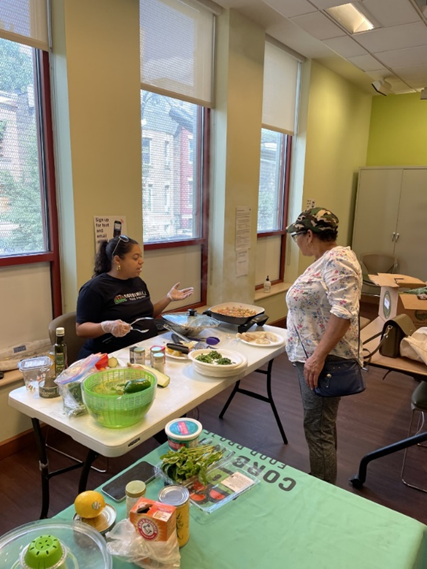
The FAM project also provides participants with recipes at each distribution in order to encourage the eating of fruits and vegetables. These recipes include creative and helpful ways to use the produce from that week’s distribution. Food demonstrations accompany the distribution of the recipes at least once a month at each health center introducing participants to  fruits and vegetables they may not have known or previously eaten. 


Chef Yadi leading a food demonstration. 

Bronx native Chef Yadira Garcia, also known as, the “Happy Healthy Latina” or Chef Yadi, is the chef enthusiastically creating delicious and nutritious dishes for patients to try. She makes sure that patients are educated on the multiple ways to prepare the different produce and is always open to answering any questions that the participants may have. 


As of February 2024, when enrollment ended, 374 patients were enrolled in the program and 130 have completed their 6-month commitment. We will conduct a program evaluation to assess patients’ overall opinions and feedback of the program to determine the effectiveness of this intervention and the impact it has had on the participants. To date feedback from some participants indicate that the program, for them, is a resounding success. An Urban Horizons patient shared that they are “very happy as a lot of us need this program, we get healthy food and we need this in the neighborhood. You’re doing a very good thing for us." A Stevenson patient said she “enjoys this program so much as I am learning how to cook and eat different things.” A patient from Walton stated, “by receiving these produce box two times a month, I am able to eat healthier which is contributing to my weight loss.”


Wednesday, November 1, 2023

The Boogie Down Walking Club: Implementing Walking Programs as a Sustainable Form of Physical Activity


Members of Grand Concourse Seventh Day Adventist Church Walking Club.


This post was written by Immaculada Moronta.


With the high rates of obesity and overweight in many South Bronx neighborhoods, a low impact activity such as walking provides a great opportunity for residents to get physical activity. But being able to safely engage in physical activity in many Bronx neighborhoods is no simple walk in the park. Many areas of the Bronx are densely populated urban areas where open, green spaces are limited, and many public areas have conditions that discourage residents to get out and walk. There are unsafe walking conditions such as unpaved and uneven or dirty sidewalks, construction activities, unsafe crosswalks, busy vehicular traffic and areas with criminal activity. 


Bronx Health REACH, in collaboration with Equity Design, an organization that uses physical activity to motivate and transform the lives of youth, adults and communities, launched a walking program, with seven participating faithbased organizations. Bible Church of Christ, Cathedral at Greater Faith in the Bronx, Church Alive Community Church, Grand Concourse Seventh Day Adventist, Every Day is a Miracle, New Life Rehoboth Church and St. Jerome Church completed the program with 80 participants in the summer of 2023. From June to September, the partners collectively walked 128.23 miles/296,801 steps.  


Members of Cathedral at Greater Faith in the Bronx Walking Club.


The walks not only provide a low-impact physical activity and social connectedness, but also create a safe environment for the community of walkers by activating spaces deemed unsafe or unfit for walking, and to help narrow existing health inequity gaps that remain for Black and Latino residents in many Bronx communities.


The partners designed their walking routes with technical assistance provided by Equity Design and tailored their goals to the needs and capacity of the people leading the clubs and the participants. For example, the goal for one of the walking clubs included a one-mile walk in 20 to 30 minutes, while another it was 1,000 steps per participant. The walking clubs also set a collective goal of completing one million steps. Prospective members of a walking club completed a survey to determine what days and times they preferred to walk, how many times a week to meet and if they had any health issues that would impact their ability to walk.  Each walking club partner completed a walking assessment of their proposed walking route to determine walkability, taking into account: sidewalk conditions, pedestrian traffic, the number of trees and seating per block along a route, cleanliness of routes, vehicular traffic and accessibility to public transportation. 


Members of Christian Bible Temple Walking Club.


A major success of this project was that each walking club created their own timeline and action steps to ensure the sustainability of their program. A tool developed for the walking clubs was a walking course map highlighting and identifying the degree of ease vs. difficulty for each route i.e. steep places vs. flat surfaces and distance. The tools could be accessed through Google Earth on users’ smartphones. A captain and co-captain were selected by the members of each walking group. To promote their walking club and church affiliation some walking clubs printed their own t-shirts for each participant to wear and provided them with visors, water bottles, pedometers, captain t-shirts, and whistles. 


The impact of this initiative can be seen at both the community and individual level. One notable example of community level impact is Bible Church of Christ. During their environmental assessment of their proposed walking route, members observed that substance abusers and homeless people occupied an open space along their walking route. Instead of finding an alternate route, they invited all those that were there to join them. Several community members subsequently joined them in their weekly walks. As a result, those residents who joined, are helping the walking club create a safer space. Individual walking club members have been touting the benefits from walking. Christian Bible Temple completed a community clean-up day surrounding the blocks around the church that were was part of their walking route. Equity Design connected them with the New York City Department of Sanitation and received tools to continue with the cleanup. On the individual level, one woman, a senior citizen, had been using a walker when she started walking with the walking club, and now she no longer needs to use a walker.
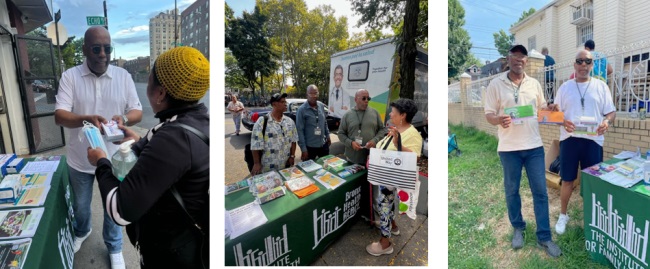

The faith-based walking clubs not only provide physical activity but social connectedness as well for participants, which many sought following the devastating isolation brought on by the COVID-19 pandemic. The level of commitment from the walking clubs is powerful. Many times over these walking clubs have brought people together with the goal of making healthier versions of themselves. Our walking clubs always find a way to bring out the best in each of their members with the goal of getting physically active in the Boogie Down Bronx!

Monday, October 2, 2023

Food Education Roadmap: Building a Healthier Relationship with Food in Schools


This blog post was written by Diana Bernal, Program Coordinator for the Creating Healthy Schools and Communities program at Bronx Health REACH.

When it comes to health outcomes, nearly 40% of New York City public school children are overweight or obese and this disproportionately affects Black and Latino students.  Children living in the Bronx have the highest prevalence of being overweight at 43% compared to 38% in Manhattan, 39% in Queens, 40% in Staten Island, and 41% in Brooklyn. Being overweight or obese increases the risk of developing chronic diet-related disease, such as diabetes, obesity, and hypertension. 

Through our Creating Healthy Schools & Communities (CHSC) program, Bronx Health REACH works with Bronx schools to help improve their school wellness, nutrition, and physical activity. In doing so we learn the struggles schools face when it comes to the students’ health and nutrition. School leadership and teachers have told us that their students do not like the food being served to them during their school lunch period, and that many would rather eat chips, like Takis (spicy corn chips made of rolled tortillas, similar to taquitos), and other unhealthy foods. These are known as “competitive foods”, which includes all food and beverages outside of the reimbursed meals provided by schools. New good nutritious food changes, like Plant Powered Fridays, which is when students are served meatless meals, have been made in an effort to introduce more plant-based foods to children. Bronx Health REACH, through its CHSC work with schools, have discussed with school leadership  how to improve nutrition in schools. The leaders  shared, that  Plant Powered Fridays has not been well received in schools and that  the kids do not eat the food. Teachers pointed out that students are more likely to try new things when they are being engaged and taught about it, thus highlighting the need for food education. According to the Food Ed report: 

“Food education describes any combination of educational strategies, accompanied by environmental supports, designed to motivate and facilitate voluntary adoption of food choices and other food and nutrition-related behaviors that are conducive to the health and well-being of individuals, community, and the planet.” 


On June 6, 2023, Mayor Eric Adams, along with New York City Department of Education (NYCDOE) Chancellor David Banks, and the Mayor’s Office of Food Policy’s Executive Director, Kate MacKenzie, announced the Food Education Roadmap to promote healthier school communities across New York City. “Prioritizing Food Education in Our Public Schools: A Path to Developing a Healthy Next Generation” provides goals, strategies and key performance indicators to ensure that students have the tools and knowledge to lead healthy lifestyles. The Roadmap Goals and Strategies focus on building on the knowledge and accessibility of healthy eating and wellness among students, as well as for those in the community who serve as advocates.  

Food education takes a wider approach and focuses on more than what healthy and non-healthy foods are. It focuses on our relationship with food and how this relationship is connected to, and affected by, other influences such as culture, economy, and communities. By implementing food education in schools, students will be able to understand why certain foods are healthier than others which will enable them to form a better relationship with food, and in turn help to guide them to making healthier choices. 

Bronx Health REACH’s many years of experience working to change the food culture of schools helping children embrace new healthy food underscores the need for food and nutrition education in  making such a change happen.   There are many resources and organizations getting kids to try new foods that are introduced in the schools through the Farm to School program that the NYCDOE Office of Food and Nutrition Services participates in. 

References:

1. FoodEdReport_010.pdf (nyc.gov) 

2. databrief1.pdf (nyc.gov) 

Welcome!

Welcome to the Bronx Health REACH blog! If you're new to Bronx Health REACH, check out our website to learn more about us. You can also friend us on Facebook or follow us on Twitter!